
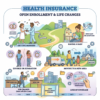
The closing of the standard health insurance Open Enrollment Period (OEP) often brings an immediate sense of finality. For many individual consumers and small business owners who missed the window, there is a common misconception that they must remain uninsured or stick with an inadequate plan until the next annual cycle begins. However, life does not pause for administrative calendars.
Under guidelines established by the California Department of Insurance (CDI) and federal regulatory bodies, the individual health insurance market accommodates significant life transitions through a mechanism known as a Special Enrollment Period (SEP). If you experience a verified major life change—referred to as a Qualifying Life Event (QLE)—the door to securing or altering your health plan swings wide open, ensuring you are not left unprotected when you need care the most.
Understanding Qualifying Life Events (QLEs)
An SEP is not an extension of Open Enrollment for those who simply forgot to sign up. Instead, it is a legally protected pathway triggered by specific, documented disruptions to your household status or previous health insurance. These events generally fall into four distinct categories:
| Category | Common Triggers | Typical Action Window |
| Loss of Prior Coverage | Involuntary loss of employer plans, aging out of a parent’s plan at 26, or expiration of COBRA. | 60 days from coverage loss |
| Household Changes | Legal marriage, entering a registered domestic partnership, birth, adoption, or fostering a child. | 60 days from the event |
| Relocation | Permanently moving to California from another state, or moving between California ZIP codes resulting in new plan options. | 60 days from the move date |
| Income & System Adjustments | Significant fluctuations in income altering subsidy eligibility, or transitioning out of Medi-Cal. | 60 days (up to 90 days for Medi-Cal) |
Compliance Note: Voluntarily dropping a health plan or being terminated for non-payment of premiums does not constitute a qualifying loss of coverage. To maintain market integrity, regulatory bodies require authentic documentation for all SEP applications.
Real-World Scenarios: Life in Transition
To understand how these rules apply in day-to-day scenarios, consider these common situations faced by California professionals and families:
- The Relocating Entrepreneur: Sarah recently moved her boutique consulting firm from Texas to California. Because her physical address changed, she gained access to local California rating regions and networks. This permanent relocation opened a 60-day SEP window, enabling her to secure an individual health plan without a penalty or coverage gap.
- The Transitioning Employee: David decided to leave his corporate job to launch an independent contract business in April—months after Open Enrollment closed. Because leaving his job resulted in the loss of his employer-sponsored minimum essential coverage, he legally qualified for an SEP.
For both Sarah and David, these windows allowed them to safeguard their health and financial well-being during highly fluid professional transitions.
Action Timelines and Verification
Time is of the essence when dealing with an SEP. For the vast majority of qualifying events, consumers have exactly 60 days from the date of the event to select a plan and submit their application. Failing to act within this window means losing the opportunity to enroll until the next annual Open Enrollment Period.
Furthermore, state and federal exchanges require official verification. Applicants should gather relevant documentation immediately following their life event. This may include a letter of credible coverage termination from a former employer, a marriage certificate, a new lease agreement, or a birth certificate.
Ensuring accuracy during this process is vital. Working alongside a qualified insurance professional helps guarantee that your application complies fully with state standards, avoiding costly processing delays or unintended gaps in protection.
Looking Ahead Safely
Navigating the health insurance landscape outside of the traditional enrollment window can feel daunting, but you do not have to do it alone. If you have recently experienced a major life transition or anticipate one on the horizon, exploring your options early is the best way to maintain continuous, high-quality care.
To evaluate your eligibility and review compliant individual and family plans tailored to your specific circumstances, reach out to the licensed professionals at TheBenefits.Guru Insurance Services for educational guidance.